Introduction
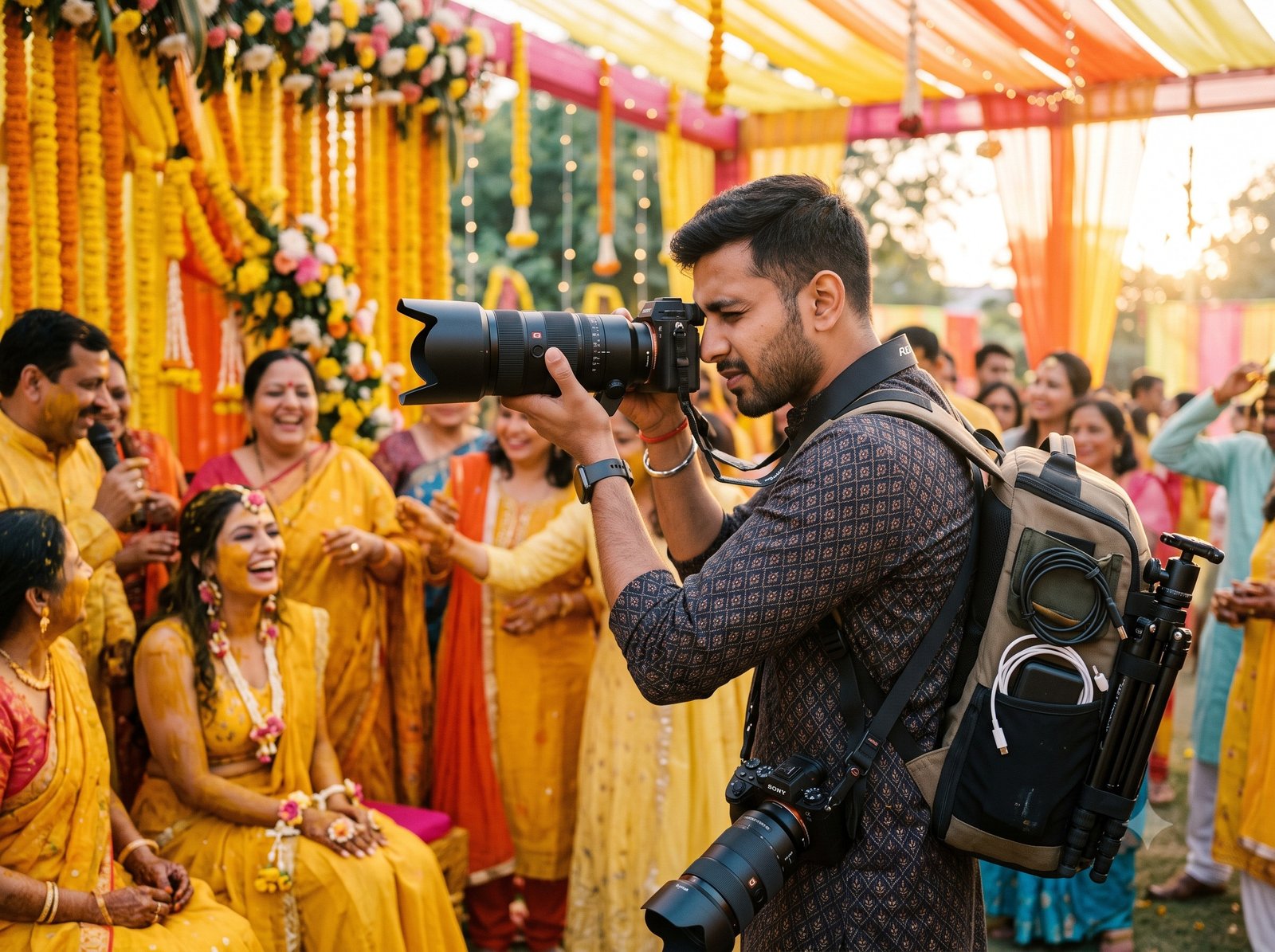
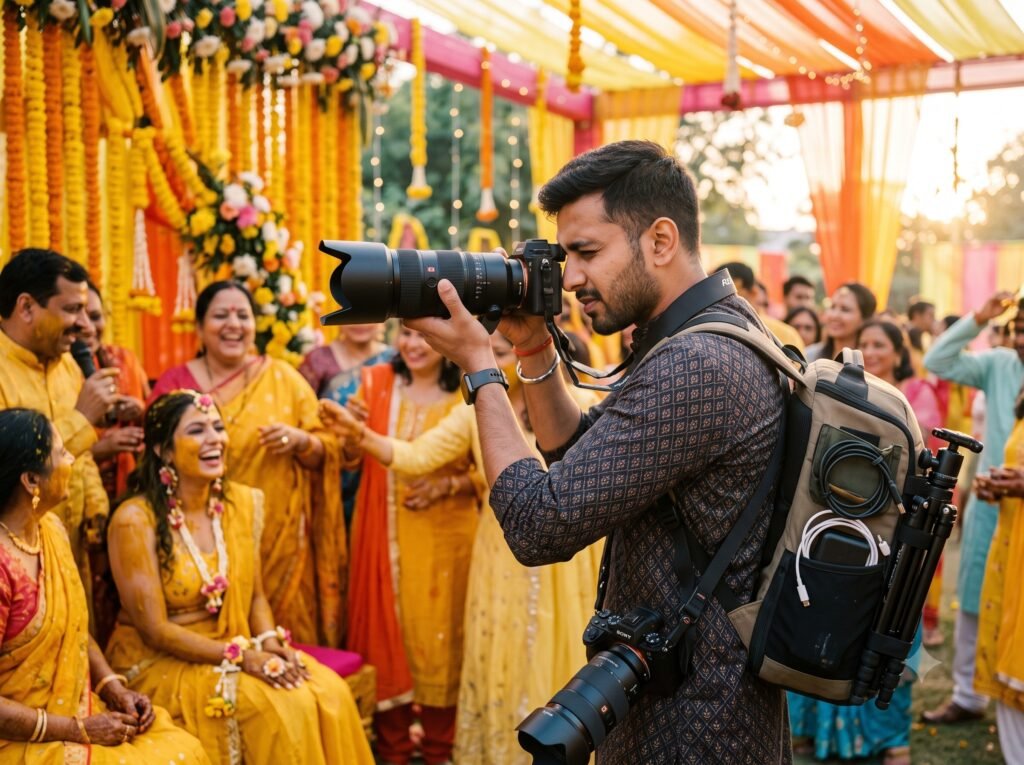
Indian weddings are unlike anything else in the photography world. Three to five days of events, low-light mandaps, fast-moving baraats, emotional candid moments, and clients who expect cinematic-quality delivery of every single function. If you show up underprepared, there are no retakes.
That’s why we’ve built this wedding photography equipment checklist based on decades of hands-on experience at Alankar Camera Store — serving photographers across India since 1976. Whether you’re shooting your first wedding or upgrading a professional kit, this guide covers exactly what goes into a reliable Indian wedding photographer’s bag: cameras, lenses, lighting, audio, drones, storage, and the backup gear most beginners forget until it’s too late.
Table of Contents
- Why Indian Weddings Demand Specialised Gear
- Cameras: Your Primary and Backup Bodies
- Essential Wedding Photography Lens Kit
- Lighting Equipment: Flash, LED and Modifiers
- Audio and Video Gear for Wedding Films
- Drones for Indian Wedding Cinematography
- Storage, Batteries and Power Management
- Support Gear: Tripods, Gimbals, Monopods
- Bags, Straps and Protection
- Complete Wedding Photography Gear Checklist (Downloadable Table)
- Expert Tips from the Field
- Buying Guide: Budget vs Professional Kits
- Common Mistakes Wedding Photographers Make
- Product Recommendations
- FAQs
- Conclusion
1. Why Indian Weddings Demand Specialised Gear
A typical Indian wedding itinerary includes engagement, haldi, mehendi, sangeet, the main wedding ceremony, and reception. Each event brings different challenges:
- Haldi & mehendi (daylight, colour-heavy): Fast autofocus, weather sealing against turmeric and water splashes
- Sangeet (stage lighting, fast movement): Excellent high-ISO performance, fast telephoto zooms
- Mandap ceremony (dim, mixed lighting, fire rituals): Wide-aperture lenses, silent shutters, dual card slots
- Baraat (chaotic, outdoor, night): Powerful flash with high-speed sync, weather sealing
- Reception (large venues, LED panels): Fast zooms, off-camera lighting, gimbal work for films
Unlike Western weddings — usually one day, one venue — Indian weddings are a marathon. Gear durability, redundancy, and low-light capability aren’t luxuries; they’re requirements.
2. Cameras: Your Primary and Backup Bodies
Direct answer for featured snippet: A professional Indian wedding photographer should carry at least two camera bodies — one full-frame primary and one identical or compatible backup — both with dual card slots, strong high-ISO performance (usable up to ISO 12800), silent electronic shutter, and weather sealing.
Key specifications that matter
| Spec | Why It Matters at Indian Weddings |
|---|---|
| Dual card slots | Instant backup of every ritual — you cannot ask for a re-shoot |
| High ISO (12800+ usable) | Dim mandaps, candle-lit ceremonies, night receptions |
| Fast AF with eye/face tracking | Chasing baraats, dance performances, emotional candid moments |
| Silent shutter | No shutter clicks during pheras or vows |
| Weather sealing | Haldi splashes, monsoon weddings, dust |
Recommended body types
- Full-frame mirrorless (Sony A7 IV, Canon EOS R6 Mark II, Nikon Z6 III, Sony A7S III for video-first shooters) — the current gold standard for hybrid photo-video delivery
- APS-C mirrorless (Sony A6700, Canon R7, Fujifilm X-T5) — excellent budget-friendly option, especially for second shooters
- DSLR (Canon 5D Mark IV, Nikon D850) — still viable, rugged, and widely available with second-hand value in India
Pro tip: Buy two bodies from the same system so you can share batteries, cards, and lenses — and swap instantly mid-ceremony without changing your muscle memory.
3. The Essential Wedding Photography Lens Kit
Direct answer: The core wedding lens kit is a fast standard zoom (24–70mm f/2.8), a telephoto zoom (70–200mm f/2.8), and a fast prime (35mm or 50mm f/1.4–1.8) for low-light ceremonies and creative portraits.
The classic three-lens setup
| Lens | Best For | Notes |
|---|---|---|
| 24–70mm f/2.8 | Getting-ready shots, group photos, reception, general coverage | Your workhorse — 60% of the wedding |
| 70–200mm f/2.8 | Candid moments, sangeet performances, ceremonies from a distance | Lets you shoot unobtrusively |
| 35mm f/1.4 or 50mm f/1.8 | Mandap pheras, candle-lit rituals, environmental portraits | Wide aperture for extreme low light |
Useful additions for Indian weddings
- 24mm or 16–35mm f/2.8 — grand venue interiors, baraat wide shots, dramatic couple portraits
- 85mm f/1.4 or f/1.8 — stunning bridal portraits and compression
- 100mm/90mm macro — rings, mehendi detail, jewellery shots
- Fast 70–200 with optical stabilisation — essential for handheld night shooting
Brands like Sony G Master, Canon L-series, Nikon S-line, Sigma Art, and Tamron all offer strong options across budgets. Explore our Camera Lenses collection to compare options side by side.
4. Lighting Equipment: Flash, LED and Modifiers
Indian wedding venues are notoriously dark, and venue lighting is often unpredictable. Lighting gear separates amateurs from professionals.
Must-have lighting kit
- 2–4 speedlights (Godox TT685 II / V860 III) — lightweight, affordable, perfect for barsati and reception coverage
- 1–2 strobes (Godox AD200 Pro or AD400 Pro) — powerful off-camera flash for dramatic reception setups
- High-speed sync triggers (Godox XPro/X2T) — shoot wide open at f/1.8 in daylight
- LED video lights — continuous light for video coverage, getting-ready shots, and detail work
- Modifiers — 24″x24″ softbox, MagMod-style gels for mixed tungsten/LED venue lighting
Field tip: Carry CTO/CTB colour gels. Indian venues mix warm tungsten, cool LED panels, and daylight — gel your flashes to match ambient and your skin tones stay clean.
Browse our LED Video Lights and Studio & Flash Equipment categories for tested options.
5. Audio and Video Gear for Wedding Films
If you deliver highlight films (and today, almost everyone does), audio is half the experience.
Essential wedding videography equipment
- Gimbal stabiliser (DJI RS 4 / RS 4 Pro) — cinematic movement during entry shots and couple sessions
- Wireless microphone systems (Rode Wireless GO III, Sennheiser G4) — clip on the groom and pandit; capture the vows clearly
- Shotgun microphone (Rode VideoMic Pro+, NTG5) — on-camera backup audio
- Audio recorder (Zoom H1n/H5) — record pandit’s chants, sangeet performances, ambient sound
- Action camera (GoPro Hero 13) — baraat coverage, creative mounted angles
A good rule: redundant audio always. Clip a lav on the groomand* keep a recorder near the mandap. Vows happen once.
Check out our Gimbals and Microphones collections.
6. Drones for Indian Wedding Cinematography
Drone shots have become a signature of premium Indian wedding films — baraat processions, haldi outdoor setups, palace venues in Rajasthan and Udaipur.
What to look for:
- DJI Mini 4 Pro — under 249g, no licence needed for recreational use in most cases, great for travel photographers
- DJI Air 3S — dual camera, excellent low-light performance, better range
- DJI Mavic 3 Pro — professional cinematic quality for high-end destination weddings
Legal note: Always check DGCA drone regulations and obtain necessary permissions before flying at wedding venues in India. Many hotels and palaces require prior approval.
7. Storage, Batteries and Power Management
This is where weddings are won or lost. A card failure without backup is career-threatening.
The non-negotiables
- Minimum 4–6 memory cards per camera, all high-endurance (SanDisk Extreme Pro, Sony Tough, ProGrade) — 128GB or 256GB V90 cards for video
- Never format cards until the wedding is fully delivered and backed up
- Shoot simultaneously to both cards (RAW to slot 1, JPEG/RAW to slot 2)
- 4+ batteries per body — Indian weddings run 8–12 hours; silent-shutter shooting drains faster
- Fast dual-bay charger + power bank (20,000mAh+)
- Portable SSD (Samsung T7 / SanDisk Extreme) for same-day backups on location
Rule of thumb: Budget at least ₹8,000–₹15,000 of storage per full wedding day. It’s cheap insurance.
8. Support Gear: Tripods, Gimbals, Monopods
- Sturdy tripod (Manfrotto, Peak Design Travel Tripod) — formal group shots, low-light long exposures, self-portraits
- Monopod — 600mm-equivalent reach for sangeet performances without tripod bulk
- Camera gimbal — covered above; non-negotiable for videographers
- Plenty of gaffer tape, clamps, and spare quick-release plates — the small stuff saves the shoot
9. Bags, Straps and Protection
- Rolling gear case (Pelican-style hard case or Think Tank roller) — airport travel for destination weddings
- Comfortable dual-strap harness (HoldFast, BlackRapid) — two bodies, hands free
- Rain covers — monsoon weddings are real
- Sensor cleaning kit, microfiber cloths, lens wipes — haldi and dust will get everywhere
10. Complete Wedding Photography Gear Checklist
| Category | Items | Qty |
|---|---|---|
| Cameras | Primary full-frame body | 1 |
| Backup body (same system) | 1 | |
| Lenses | 24–70mm f/2.8 | 1 |
| 70–200mm f/2.8 | 1 | |
| 35mm or 50mm prime | 1 | |
| 85mm / macro (optional) | 1–2 | |
| Lighting | Speedlights | 2–4 |
| Strobe (AD200 class) | 1–2 | |
| Trigger + gels + softbox | 1 kit | |
| LED panel | 1–2 | |
| Video | Gimbal | 1 |
| Wireless mics | 2 tx | |
| Recorder + shotgun mic | 1 each | |
| Drone (optional) | 1 | |
| Power/Storage | Batteries | 4+ per body |
| Memory cards | 6+ per body | |
| SSDs + card reader | 2 + 1 | |
| Support | Tripod, monopod, clamps | 1 each |
| Extras | Rain covers, cleaning kit, gaffer tape, multi-tool | 1 kit |
11. Expert Tips from the Field
- Scout the venue lighting a day before if possible — know where your flash will go.
- Match your second shooter’s system to yours for consistent colour and file handling.
- Rotate batteries every 2 hours during long ceremonies rather than waiting for warnings.
- Use electronic shutter for silent ceremonies, mechanical for flash work — most modern bodies handle both.
- Keep one body with a 35mm prime always ready for candid moments — the best frames never wait.
12. Buying Guide: Budget vs Professional Kits
| Tier | Approx. Budget | Setup |
|---|---|---|
| Starter | ₹1.5–3 lakh | One APS-C body (Canon R7 / Sony A6700), Tamron 28–75 f/2.8, 50mm f/1.8, one speedlight, 2 cards |
| Mid-level | ₹4–7 lakh | Two full-frame bodies, 24–70 f/2.8, 70–200 f/2.8, prime, 2 speedlights + trigger, gimbal, wireless mics |
| Professional | ₹8–15 lakh+ | Two flagship bodies (A7 IV / R6 II), G Master/L-series glass, AD400 strobes, Mavic 3 Pro, full audio kit |
Buying advice: Spend on lenses before bodies. Glass holds value, defines image quality, and outlasts multiple camera generations. Also — buy from authorised dealers only. At Alankar Camera Store, every product comes with official brand warranty and genuine billing, which protects your professional investment.
13. Common Mistakes Wedding Photographers Make
- No backup body or single-card shooting — the most dangerous mistake in the business
- Underestimating battery and card needs for multi-day Indian weddings
- Ignoring audio until the vows are inaudible
- Buying the cheapest memory cards — fake and slow cards cause corrupted files
- Not testing new gear before a wedding — never debut equipment on a client’s big day
- Skipping weather protection — haldi, dust, and monsoon destroy unsealed gear
14. Product Recommendations
- Best all-round wedding body: Sony A7 IV — hybrid excellence, dual slots
- Best Canon option: Canon EOS R6 Mark II — brilliant autofocus in low light
- Best Nikon option: Nikon Z6 III
- Best workhorse zoom: Sony 24–70mm f/2.8 GM II / Tamron 28–75mm G2 (budget)
- Best telephoto: Sony 70–200mm f/2.8 GM II / Sigma 70–200mm f/2.8 DG DN
- Best flash system: Godox (V860 III, AD200 Pro, XPro trigger)
- Best gimbal: DJI RS 4 Pro
- Best wireless mics: Rode Wireless GO III
- Best budget drone: DJI Mini 4 Pro
15. FAQs
Q1. What equipment do I need for wedding photography as a beginner in India?
Start with one capable body (APS-C or full-frame) with dual card slots, a 24–70mm f/2.8 or 28–75mm f/2.8 zoom, a 50mm f/1.8 prime, two memory cards per body, four batteries, and one speedlight with a trigger. Add a second body once you’re booking paid weddings regularly.
Q2. Is a full-frame camera necessary for wedding photography?
Not mandatory, but strongly recommended. Full-frame sensors handle dim mandap lighting and high-ISO noise far better. A skilled photographer with an APS-C body and fast primes can still deliver excellent results.
Q3. Why do wedding photographers need dual card slots?
Indian wedding rituals happen once — there are no retakes. Dual card slots record every image to two cards simultaneously, so a single card failure doesn’t cost you the entire wedding.
Q4. Which lens is most important for Indian wedding photography?
A 24–70mm f/2.8 is the workhorse covering 60% of your shooting. For candid-heavy styles, the 70–200mm f/2.8 is equally essential.
Q5. How many memory cards and batteries should I carry for an Indian wedding?
Carry 4–6 cards per body (128–256GB each) and at least 4 batteries per camera. Multi-day weddings need double that, plus a portable SSD for daily backups.
Q6. What flash setup is best for sangeet and reception photography?
Two to three speedlights with a wireless trigger, plus one powerful strobe (Godox AD200 Pro class) for off-camera dramatic lighting. Always carry colour gels for mixed venue lighting.
Q7. Do I need a drone for wedding videography in India?
For premium and destination weddings, yes — drone coverage is now an expectation. Choose a DJI Mini 4 Pro or Air 3S, and always verify DGCA rules and venue permissions.
Q8. Where can I buy genuine wedding photography equipment in India?
Buy from authorised retailers with official brand warranty. Alankar Camera Store has been serving Indian photographers since 1976 with genuine, warrantied gear and expert guidance.
Conclusion
Indian wedding photography is demanding — long hours, unpredictable light, and moments that happen exactly once. But with the right checklist, you can walk into any venue confident that your gear won’t let you down. Build redundancy into every layer: two bodies, dual cards, spare batteries, backup audio. Invest in lenses before bodies, test everything before the big day, and buy genuine, warrantied equipment from trusted authorised dealers.
Ready to build your wedding photography kit? At Alankar Camera Store, we’ve guided Indian photographers since 1976 — nearly five decades of real, hands-on expertise. Explore our curated collections of cameras, lenses, lighting, and creator gear at alankarcamerastore.com, or reach out to our team for personalised kit recommendations for your budget. Your next unforgettable wedding starts with the right gear.